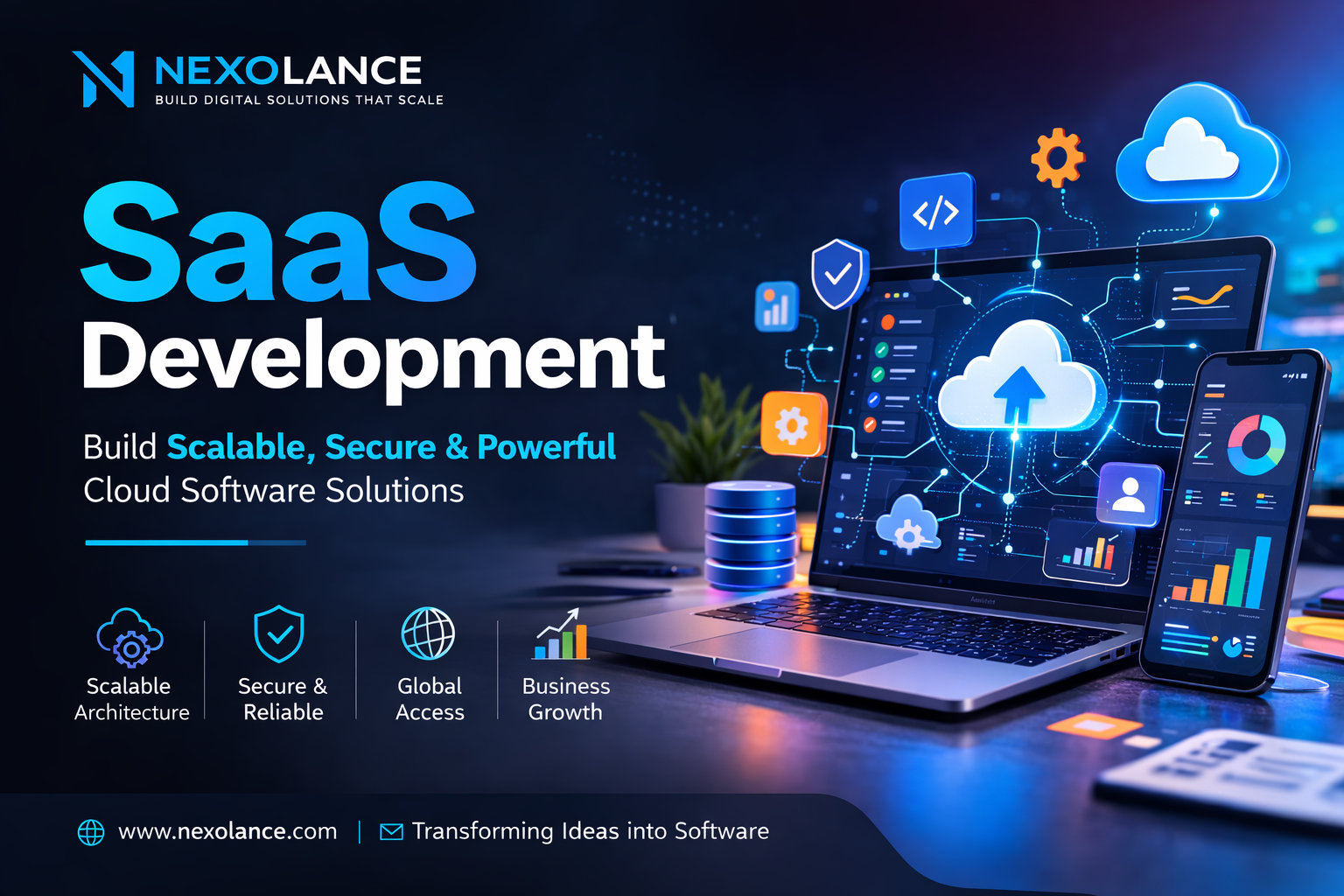
Software as a Service (SaaS) has transformed how businesses deliver software products. Instead of installing software locally, SaaS applications are hosted in the cloud and accessed through web browsers. Companies such as Salesforce, Slack, and Zoom have demonstrated how powerful SaaS platforms can be for modern businesses.
SaaS development focuses on creating scalable, secure, and high-performance applications that support multiple users while maintaining reliability and flexibility.
Key Benefits of SaaS Applications
1. Accessibility
Users can access SaaS platforms from anywhere using an internet connection.
2. Scalability
Cloud infrastructure allows SaaS products to scale easily as the number of users grows.
3. Lower Costs
Businesses avoid expensive infrastructure and maintenance costs.
4. Automatic Updates
SaaS platforms can be updated centrally without requiring users to install updates manually.
Essential Components of SaaS Development
Multi-Tenant Architecture
Multiple users share the same infrastructure while maintaining secure data separation.
Cloud Infrastructure
Platforms such as AWS, Google Cloud, and Azure provide scalable environments.
API Integration
SaaS platforms often integrate with other services using APIs.
Subscription Billing Systems
Most SaaS platforms use subscription-based pricing models.
Technologies Used in SaaS Development
Common technologies include:
Frontend:
React
Vue.js
Angular
Backend:
Laravel
Node.js
Django
Cloud & Infrastructure:
AWS
Docker
Kubernetes
Databases:
PostgreSQL
MySQL
MongoDB
SaaS Development Process
Market Research & Idea Validation
UI/UX Design
Architecture Planning
MVP Development
Testing and Security Implementation
Deployment on Cloud Infrastructure
Continuous Updates and Scaling
Best Practices for SaaS Development
Focus on scalability from the beginning
Ensure strong security and data protection
Design intuitive user interfaces
Implement reliable cloud infrastructure
Continuously monitor system performance